It can be difficult to control glucose in a nation where food is the focus in culture, festivities and daily living. Starting with parathas in the morning to rice-related evening meals, most of the Indian cuisine is rich with carbohydrates – complicating the process of blood sugar management. However, through clever thinking, one can have a taste of Indian food and stay healthy at the same time.
This blog will discuss the way to create a weekly glucose-friendly food plan based on the use of Real-Time Glucose Monitoring, healthy living solutions and mindful Lifestyle Management strategies.
What Is a Meal Plan to Eat to keep your Glucose under Control?
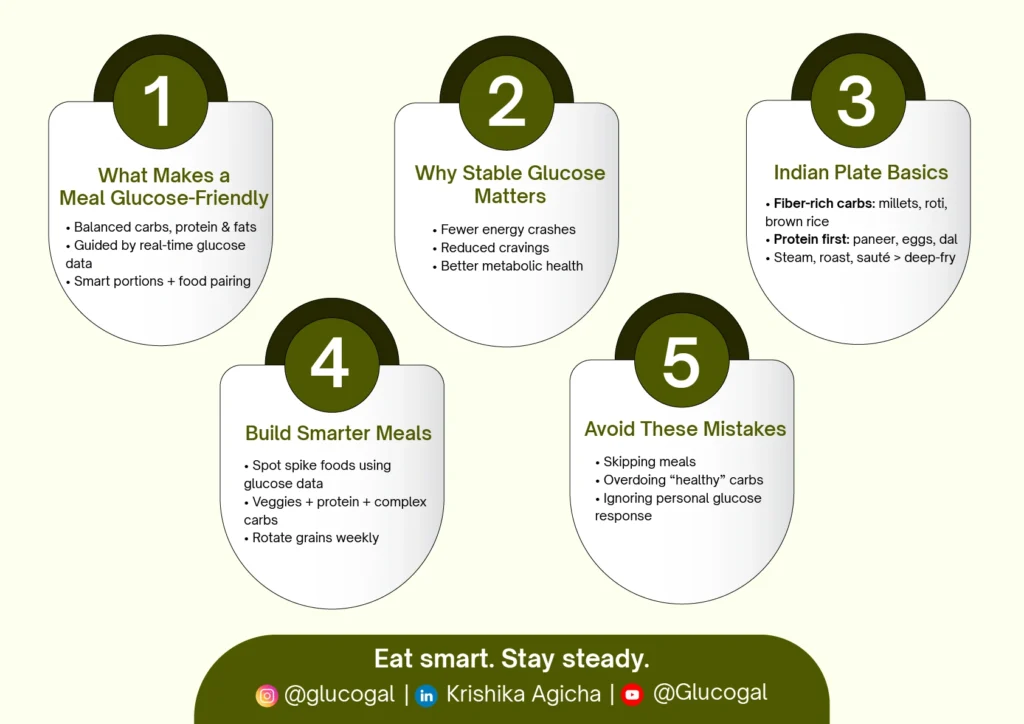
A low-carbohydrate diet is a meal that is glucose-friendly which means it is balanced with carbohydrates, proteins, and fats to avoid drastic blood sugar level changes. It does not focus on removing foods and, rather, it focuses on the timing of nutrients, control of portions, and paring foods.
The main concept is to schedule the meals according to the glucose rhythm in your body using data-supported applications such as Real-Time Glucose Monitoring. It helps you:
- Accomplish that there exist spiking foods.
- The amount of portions should be varied.
- Prepare meals that are energy giving and healthy metabolically.
This method would be most useful in regard to the Indian lifestyle where rice, rotis, and sweets are highly engrained into the eating habits.
The Rationale behind Constructing a Glucose-Friendly Plan
It is not only about preventing diabetes, but also about maximizing energy and concentration as well as long-term health. Once your glucose level is regulated, you become lighter, more vigorous, and less tired.
Prevents Energy Crashes
Unstable blood sugar tends to cause post-meal drowsiness. A balanced meal would provide consistent energy consumption.
Increases the Control of Weights and Mood.
When glucose is kept constant, there is therefore a balance in hormones and the user experiences less mood swings and cravings in the late hours of the day.
Diuretic: Promotes Long term Metabolic Wellbeing.
A Glucose management formula at an early age is a measure to avoid insulin resistance and other lifestyle disorders.
Promotes healthy eating which is sustainable.
Meal planning also instills portion management, mindful cooking and food awareness which are the key pillars of Nutritional education.
Basic Building Block of an Indian-Friendly Glucose Meal Plan
Having a proper plan does not imply that you should abandon what you love, but rather you should re-balance them in an intelligent way.
- Balanced Macronutrients:
Do not forget to combine the carbs that are rich in fiber (millets, brown rice, roti), lean proteins (paneer, eggs, legumes), and the good fats (ghee, nuts, seeds). - Meal Timing:
Have heavy meals earlier in the day when the insulin sensitivity of the body is more. - Low-GI Choices:
The foods such as oats, methi, barley, rajma, and moong dal release glucose gradually. - Smart Cooking Techniques:
Steaming, roasting and sauteeing are better options than deep-frying to preserve nutrients. - Hydration and Herbs:
Keep hydrated and add turmeric, cinnamon and fenugreek – which help in glucose balance.
Indian Meal Plan Weekly: How to create a Glucose-Friendly plan
Having a weekly meal plan will be varied and consistent without being limiting. Here’s a simplified approach:
- Assess Glucose Patterns:
Identify spike causing foods with the help of Real-Time Glucose Monitoring. - Plan Balanced Plates:
The meals are to contain fiber (salads or veggies), protein (lentils, paneer, tofu), and complex carbs (roti, quinoa, millet). - Structure Your Day:
- Breakfast: Peanuts or chia Oats with Greek yogurt or vegetables poha.
- Lunch: Brown rice, rajma and cucumber raita.
- Snack: Bunch of nuts or roasted chana.
- Dinner: Paneer Grilled paneer or dal rotis Millet rotis dunked in soup.
- Breakfast: Peanuts or chia Oats with Greek yogurt or vegetables poha.
- Portion and Pairing:
It is best to always eat veggies, then protein, and then carbs this helps to keep glucose levels down. - Rotate Ingredients:
Ensure that you do not eat the same grains every day and incorporate jowar, bajra, and ragi during the week to eliminate the nutrient deficit.
Common Mistakes to Avoid
Despite the intention, glucose stability can be impaired by a few mistakes.
- Missing Breakfast: Results in excess consumption of food in the future and unbalanced blood sugar.
- Eating too much Healthy Carbohydrates: Brown rice and oats may still soar glucose in the body.
- Disregard of Fats: Avocadoes, olive oil, and nuts are healthy fats, which retard the uptake of glucose.
- No Tracking: It is difficult to know what works with your body without Real-Time Glucose Monitoring.
Keep in mind actually – personalization is important. What balances the glucose of one individual may skyrocket the glucose of another.
The Future of Glycemia-Conscious Diet in India
The Indian consumers are now becoming conscious of nutrition with increased knowledge of healthy living solutions, wearable glucose tracking devices. Firms are currently providing Artificial Intelligence-driven Lifestyle Management applications that combine Real-Time Glucose Monitoring data and meal recommendations based on Indian diets.
It is a composite of ancient knowledge and contemporary science that is defining the next generation of Nutritional education one that will enable individuals to be in charge of their metabolic wellbeing without forfeiting cultural cuisine.
Make the Shift- One Meal at a Time
The goal of making a glucose-compatible meal plan regarding the Indian way of life is not perfection, but improvement. Gradually lemonade: Replace white rice with millets, make every meal have veggies, and smartly adjust what you like the most using Real-Time Glucose Monitoring.
With a healthy diet based on awareness and moderation, you will be able to enjoy your popular Indian cuisine and at the same time achieve long-term well-being.
Conclusion
When assembling a glucose friendly diet plan, it is not like you are eliminating taste and culture but rather making an adjustment. Through the Real-Time Glucose Monitoring, Nutritional education, and working Lifestyle Management, all Indians will be able to eat Healthy though staying balanced.
The trick is not to limit but to learn how your body reacts and create the meals that will allow you to be happy and healthy at the same time.
Be glucose-wise with GlucoGal 17 – subscribe to us on Instagram, YouTube, and Facebook and get to know food tips, tricks and actual data.