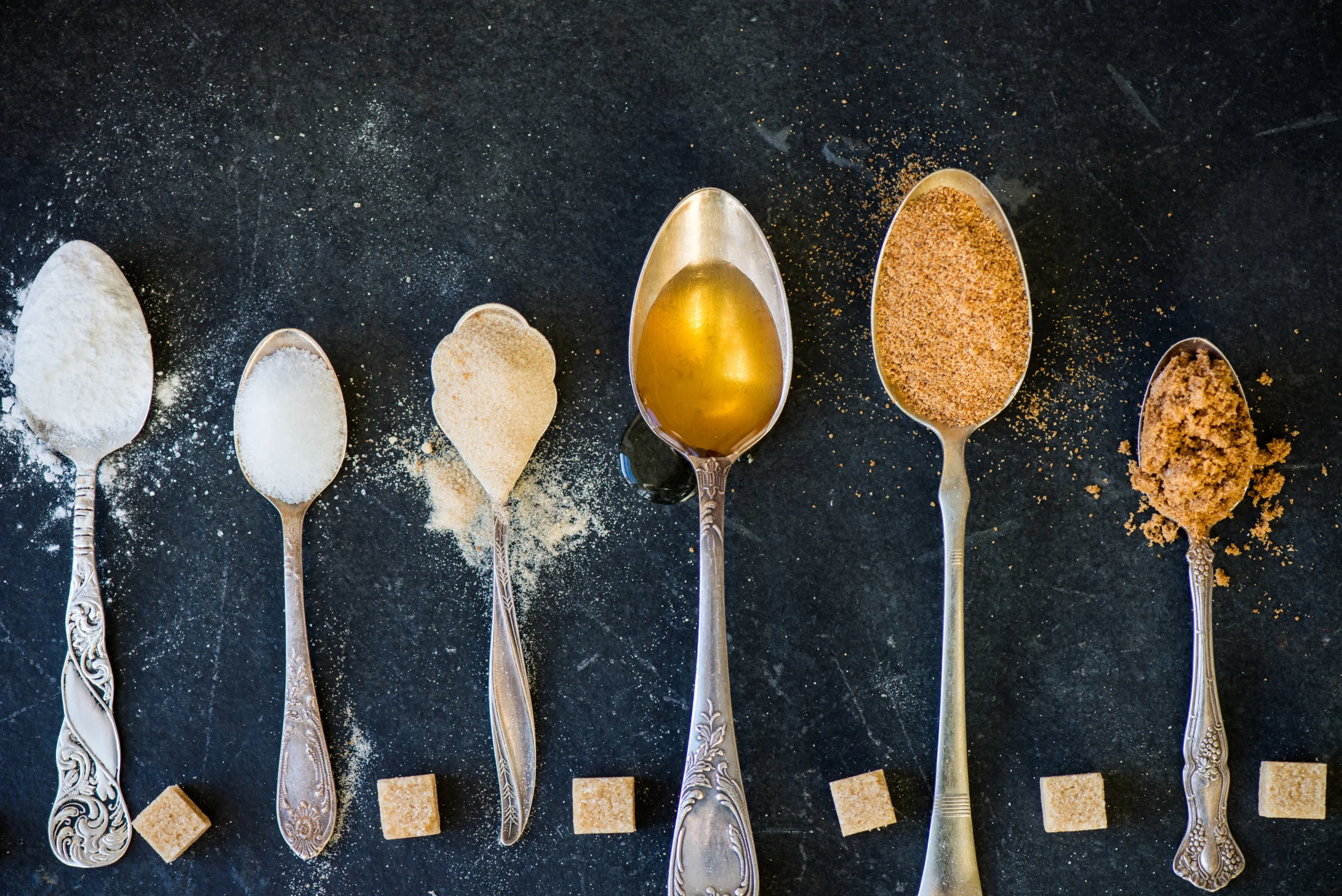
Natural sweeteners appear like the best option to any person wishing to limit sugar intake without the compromise of its sweetness. Starch-free or starch-reduced, coconut sugar, honey — however, the only problem is that not every natural sweetener does so. There are those which stabilize blood sugar and there are those which lead to unanticipated spikes in glucose.
This blog will un-pack the difference between how to make a wise decision, supported by knowledge gained through Real-Time Glucose Monitoring, and how this minor exchange can become a part of your Lifestyle Management and Healthy eating program.
What Are Natural Sweeteners?
Natural sweeteners are the alternative sources of sugar which are found in plants or naturally found substances rather than synthetic or artificial additives. They are supposed to replicate the sweetness of sugar without the demerits of its metabolism.
Examples of some of these are:
- Stevia: Extracted from the leaves of Stevia rebaudiana and is free of calories and does not increase blood sugar.
- Monk Fruit: Derived out of luo han guo and has antioxidants that add sweetness without causing glucose spikes.
- Coconut Sugar: Processed using coconut sap, which retains the minerals, although it has a higher glycemic index than many people believe.
- Honey and Maple Syrup: Natural and have a high amount of calories, however, they still influence glucose levels and need moderate consumption.
Their composition would also be understood to come up with a balanced Glucose management formula to use in daily nutrition.
The Significance of the Selection of the Right Sweetener
All natural sweeteners do not get metabolized in the same way — that is where awareness and tracking will come in. The Real-Time Glucose Monitoring helps users visualize the impact of each sweetener on their body and how it responds to different blood sugar levels.
For Better Glucose Balance
- GI sweeteners such as stevia or monk fruit assist in the prevention of spikes and crashes to maintain a constant energy level throughout the day.
Supports Weight Management
- Normal glucose levels also decrease the need to eat and thus it becomes easy to control portions, which is one of the healthy living solutions.
Aids in Long-Term Wellness
- Regular levels of glucose reduce the chances of insulin resistance and other metabolic complications.
Five Perspectives Stimulate Conscious Eating
- Monitoring your glucose levels will remind you that a natural product is not necessarily a healthy one, encouraging wiser food decisions.
The Major Distinctions Between Natural Sweeteners
Although the different types of natural sweeteners might sound similar, they have different effects depending on their makeup and glycemic index (GI).
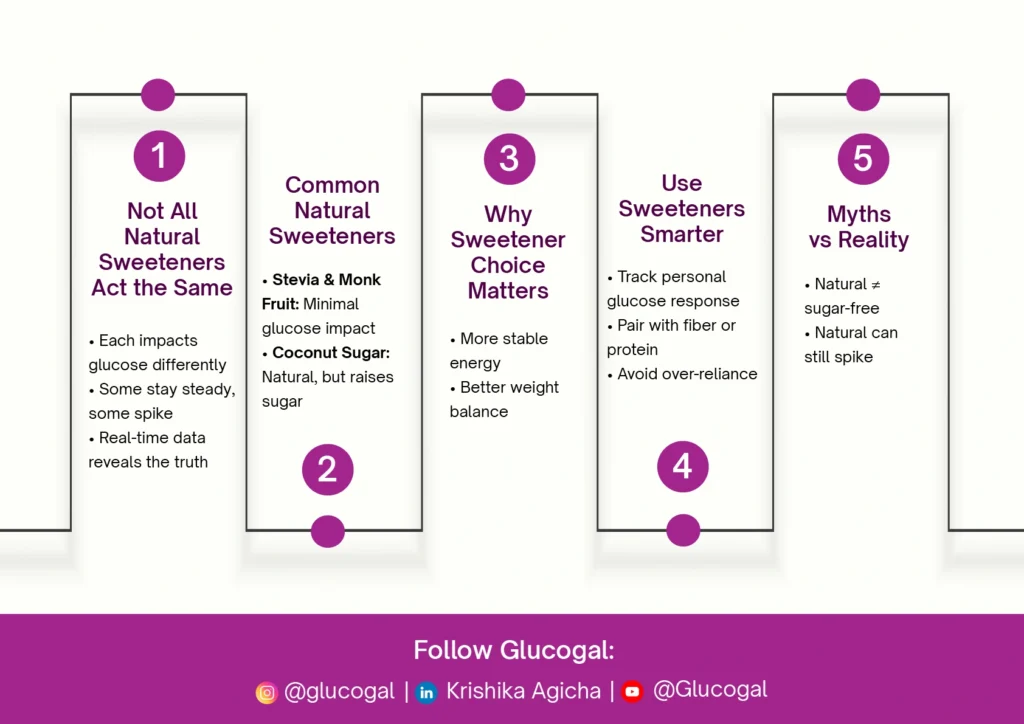
- Stevia & Monk Fruit: Damagingly low calories and little impact on blood sugar. Excellent in the application of a Glucose management formula or diabetes management.
- Honey and Coconut Sugar: Contain nutrients but increase glucose levels and thus not recommended for people who are very conscious of sugar.
- Date Syrup and Maple Syrup: Contain natural antioxidants and minerals but also more carbohydrates.
The takeaway? In natural sweeteners, context and moderation are essential.
The Wise Use of Natural Sweeteners
It is not about reducing the quantity of sweetness, it is about consuming it wisely.
- Begin with Awareness:
Attack with Real-Time Glucose Monitoring and see how various sweeteners impact the individual. - Combine with Fiber or Protein:
This will assist in delaying absorption and glucose spikes. - Rotate Sweeteners:
You should not rely on one particular sweetener to ensure your metabolism remains flexible. - Look at the Checks:
Be careful when buying the so-called natural products — they are often mixed with artificial sugars.
These steps will enable your sweet choices to be sustainable and healthy when combined with a conscious Lifestyle Management plan.
The Myths About Natural Sweeteners
A myth that is among the largest concerns the natural being automatically safe. Here’s what you should know:
- Myth 1: All natural sweeteners are sugarless.
- False. Glucose and fructose remain in honey and coconut sugar.
- False. Glucose and fructose remain in honey and coconut sugar.
- Myth 2: “Natural sweeteners do not have an impact on blood sugar.”
- Partially false. They affect glucose depending on type and portion size.
- Partially false. They affect glucose depending on type and portion size.
- Myth 3: There is always something worse about artificial sweeteners.
- Not necessarily. Some substitutes can be fairly safe in glucose regulation.
Nutritional education together with Real-Time Glucose Monitoring makes it easier to make choices best suited to you.
The Future of Sweetness: Data-Driven Nutrition
Nowadays, thanks to Real-Time Glucose Monitoring, individuals are capable of determining the actual impact of their food and beverages on sugar levels. This science changes how we perceive sweetness — not by guessing, but by knowing.
Individualized Glucose management formula will be used in the future to steer consumers toward sweeteners that do not interfere with body chemistry, allowing taste and wellness to coexist.
The change marks a big transition in Lifestyle Management, where science plays a key role in enabling better daily choices.
A Smarter Way to Stay Sweet
The next time you pick a sweetener, remember that not all natural ones are alike. Combine your options with insights from Real-Time Glucose Monitoring, follow Healthy eating, and make nutrition decisions based on awareness.
Through conscious replacements, you’ll be able to enjoy the sweetness of life — without the glucose mess.
Conclusion
Getting the appropriate natural sweetener is not about deprivation but about balance. By having access to tools such as Real-Time Glucose Monitoring and enhancing your Nutritional education, you can develop your own Glucose management formula for sustainable wellness.
Sweet does not need to imply unhealthy — it’s just necessary to be intelligent.
Be glucose-savvy with GlucoGal — get insights on food, food hacks and real data on Instagram, YouTube, and Facebook.